
Feminist Criminologist, Regent’s Professor, and Anti-rape Activist Cassia Spohn discusses her more than 50 years of advocating for and assessing the impact of rape law reform and the failures of the criminal justice system.
Watch Podcast on YouTube:
Show Notes
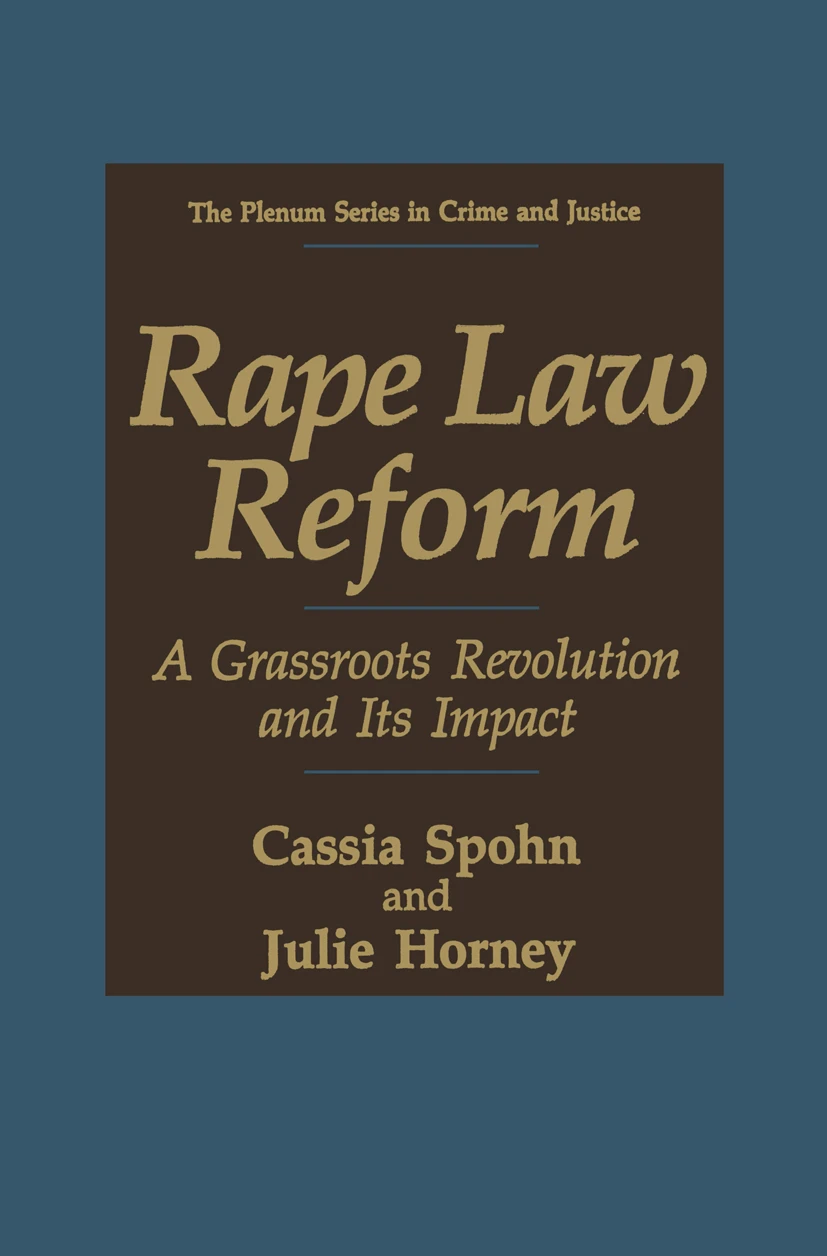
Rape Law Reform: A Grassroots Revolution and Its Impact.
1992. Julia Horney. Rape Law Reform: A Grassroots Revolution and Its Impact. New York: Springer.
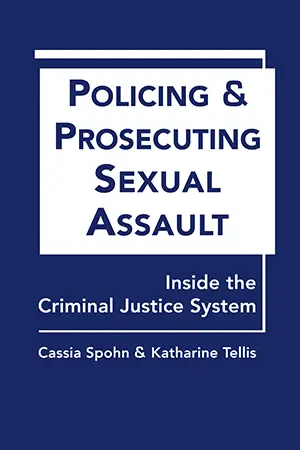
Policing and Prosecuting Sexual Assault: Inside the Criminal Justice System.
2014 Cassia Spohn and Katherine Telles. Policing and Prosecuting Sexual Assault: Inside the Criminal Justice System. Boulder, CO: Lynne Reiner.

I Am Evidence. 2017.
Spohn, Cassia. 2020. “Sexual Assault Case Processing: The More Things Change, the More They Stay the Same,” International Journal for Crime, Justice and Social Democracy, 9(1): 86-94.
https://www.crimejusticejournal.com/article/view/1454
Frohmann, Lisa. 1998. “Constituting Power in Sexual Assault Cases: Prosecutorial Strategies for Victim Management.” Social Problems 45(3): 393–407.
Frohmann, Lisa. 1997. “Complaint Filing Interviews and the Constitution of Organizational Structure: Understanding the Limitations of Rape Reform. Hastings Women’s Law Journal, 8: 365
https://academic.oup.com/socpro/article-abstract/45/3/393/1647918
https://repository.uclawsf.edu/cgi/viewcontent.cgi?article=1114&context=hwlj
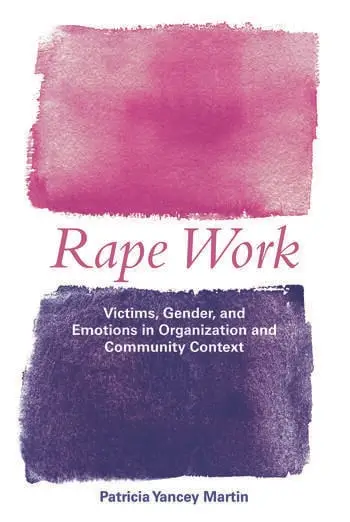
Rape Work: Victims, Gender, and Emotions in Organization and Community Context.
Martin, Patricia Yancey. 2005. Rape Work: Victims, Gender, and Emotions in Organization and Community Context. New York: Routledge.
Campbell, Rebecca and Giannina Fehler-Cabral. 2018. “Why Police “Couldn’t or Wouldn’t” Submit Sexual Assault Kits (SAKs) for Forensic DNA Testing: A Focal Concerns Theory Analysis of Untested Rape Kits. Law & Society Review, 52:73-105.
https://www.cambridge.org/core/journals/law-and-society-review/issue/
D7DBBE0350122FDE24E8453AEFFE10C5
“Start by Believing” is a campaign of End Violence Against Women International
https://startbybelieving.org/
Reva Siegal coins the term preservation through transformation in
“The Rule of Love”: Wife Beating as Prerogative and Privacy,
105 YALE L.J. 2117-2206 (1996)
Lord Hale Charge
The “Lord Hale Charge” draws its name from Sir Matthew Hale, a judge who shaped English common law during the 17th century. Hale’s writings and rulings on witchcraft and rape influenced legal practices and jury instructions for years to come. He wrote:
It is true rape is a most detestable crime and therefore ought severely and impartially to be punished with death; but it must be remembered, that it is an accusation easily to be made and hard to be proved, and harder to be defended by the party accused, tho never so innocent.
Not until 1975, did the California Supreme Court hold that a defendant did not have the right for a judge to give the jury the following cautionary instruction in a rape case:
A charge such as that made against the defendant in this case is one which is easily made and, once made, difficult to defend against, even if the person accused is innocent. Therefore, the law requires that you examine the testimony of the female person named in the information with caution.
Department of defense change.
The Defense Advisory Committee on the Investigation, Prosecution, and Defense of Sexual Assault in the Armed Forces (DAC-IPAD)
https://dacipad.whs.mil/
National Academies of Sciences, Engineering, and Medicine Panel on Sexual Assault at Sea
https://www.nationalacademies.org/projects/DBASSE-CLAJ-23-03
Propublica 2018. Could Your Police Department Be Inflating Rape Clearance Rates?
https://projects.propublica.org/graphics/rape_clearance